potalatibet
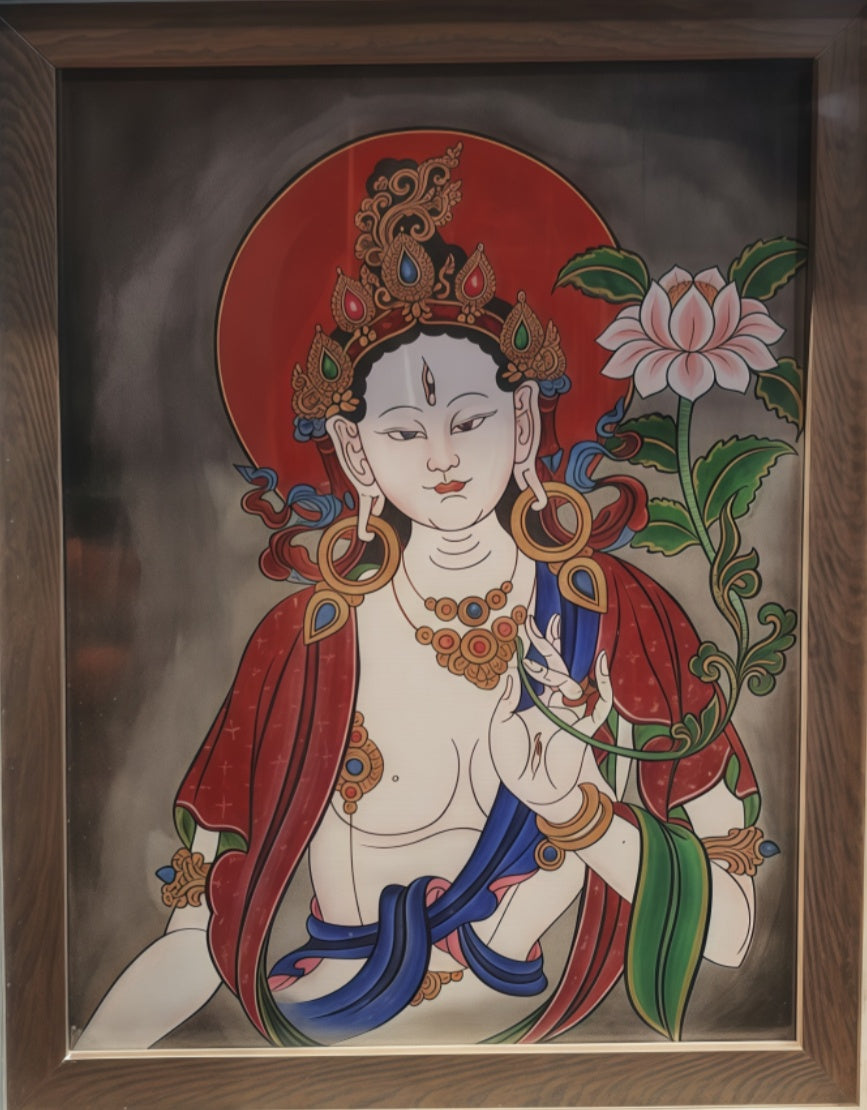
White Tara Tibetan Thangka Painting
White Tara Tibetan Thangka Painting
Couldn't load pickup availability
White Tara Thangka — The Compassionate Female Buddha
This 100% hand-painted thangka, created in the Potala Palace of Tibet, depicts one of the most important female deities in Tibetan Buddhism. She is closely connected to the compassionate vows of Avalokiteshvara (Guanyin). This thangka is not only a beautiful piece of sacred art but also a spiritual tool symbolizing longevity, health, healing, and purity. White Tara is revered by practitioners and devotees for her immense blessings in extending life and dispelling illness.
Specifications
-
Size: 6 in × 8 in
-
Canvas: Organic cotton
-
Hand-painted: Crafted by artisans from the Potala Palace, Tibet
About White Tara
Tara is one of the oldest and most beloved female deities in Tibetan Buddhism, honored as the “Mother of All Beings.” She embodies the boundless compassion and nurturing qualities of the divine feminine. Among the many stories of her origin, the most well-known include:
-
Born from Avalokiteshvara’s tears:
Legend says that when Avalokiteshvara witnessed the endless suffering of sentient beings, he shed two tears. One tear manifested as Green Tara (symbolizing swift action and protection), and the other manifested as White Tara (symbolizing compassion, longevity, and healing). -
One of the 21 Taras:
White Tara is a major manifestation among the 21 Taras, yet she is often regarded as an independent deity of longevity who embodies the collective blessings of all 21.
White Tara’s Iconography
White Tara’s image is serene, compassionate, and radiant. Her main features include:
-
Body color:Pure white, like the moon, symbolizing purity and freedom from defilements.
-
Appearance:One face and two arms, with a gentle expression. She wears a five-Buddha crown, celestial garments, and jeweled ornaments.
-
Seven eyes:Her most distinctive feature. In addition to the two eyes on her face, she has one eye on her forehead, one on each palm, and one on each sole — seven eyes in total. These symbolize her ability to see all suffering across the three realms and respond with omniscient compassion.
-
Mudra and attributes:Her right hand makes the gesture of granting wishes (varada mudra), representing her fulfillment of the aspirations of all beings.
Her left hand holds an utpala flower (white lotus), representing purity and spiritual awakening. -
Posture:She is usually depicted in full lotus posture or with one leg extended, symbolizing her readiness to rise and offer swift assistance to those in need.
Spiritual Significance of the White Tara Thangka
White Tara embodies the energies of longevity, healing, purity, and compassion:
-
Longevity:Removes obstacles to life, granting long life and good health, providing practitioners more time for spiritual cultivation.
-
Healing:Purifies the body and mind, helping heal both physical ailments and emotional wounds.
-
Purity:Cleanses negative karma, increases merit and wisdom, and leads toward liberation.
-
Compassion:Cultivates a compassionate heart and brings the protective blessings of the divine mother.